Showing posts with label gourmet. Show all posts

Wednesday, January 1, 2014

2013: The Year in Review

2013 was another exciting year for us in the kitchen. We continued our exploration of cooking techniques, new and old, with delicious results. Here are our ten favorite posts from the last year:

Ballotine of Pheasant
This was the first of many pheasant cooking techniques and our first (and so far only) foray into modernist cooking. We introduced meat glue into the classic ballotine meat binding process with passable results.


How to Debone a Whole Chicken
We demonstrate the deboning technique depicted in Larousse Gastronomique using the tools from our home kitchen, proving that with a little practice the hobbyist cook can master Olde World cooking skills.


Traditional Bouillabaisse
Every year we post a variation on my favorite seafood dish. In 2013, we went old school and replicated the process advocated by Larousse Gastronomique.


Limas and Ham
We delved more deeply into traditional Americana cooking last year, including this superior take on good old pork and beans.


A Primer on Fiddlehead Ferns
After seeing these tender little shoots appear at our local Wegmans for several springs, 2013 was the year we took the plunge. The result was one of my favorite meals of the year.


Filleting Fish and Prepping Fava Beans
This two-for-one post shows how to fillet a fish in your own kitchen, as well as how simple it is to prepare the tender, buttery fava beans.


Ultimate Pancakes
2013 was the year we perfected pancakes. The secret - cultured dairy. While buttermilk is a favorite, we used labne for a more delicate flavor.


All About the Gravy
Just in time for Thanksgiving, my counterpart shares his best gravy secrets.


Weekday Coq au Vin
We employed the slow cooker to achieve this classic French dish on a Thursday night, made entirely from ingredients found in most home kitchens.


Boeuf Bourguignon
We wrapped up the year with another French classic that was a big hit at the holiday potluck.


And, our year in review wouldn't be complete without a shout out to last year's  birthday gift to ourselves - the VacMaster VP112 chamber vacuum sealer for the home. This one tool has reduced food spoilage and waste in our kitchen, allowing us to preserve cheeses, sauces, and leftovers for future use.


Sunday, December 15, 2013

Bœuf Bourguignon

My favorite fellow foodie from work was gracious enough to invite me to her annual holiday party again this year. The last time, I was in the throws of Last Minute Holiday Panic and ended up bringing a store-bought cake (ugh). This year, I wanted to make up for that by providing something extra special that she and her guests might not ever make for themselves. I solicited the support of my very chefy counterpart, and after some discussion, we agreed on that classic French holiday party favorite: Beef Bourguignon.


Beef, wine, lardon, olive oil, and a bit of brandy - the basis for our dish


Like its chicken sibling, Coq au Vin, Beef Burgundy originated in French Wine country and was popularized in the States by the singular Julia Child. This traditional country stew is designed to give new life to middling cuts of beef. Basically, we are dressing up economical cuts of beef into something really quite special. And, chuck is an economical cut to be sure. Here are some of the things we considered when selecting our chuck:


Choosing Beef:
The Beef should come from the Chuck section of the cow. Meaning the top muscle section that supports the neck and connects to the back of the ribs.


From PressureCookerDiaries.com

In the actual Chuck Eye Roll, there are a combination of different meats, varying in toughness. The Tender top portion is the Chuck eye, and underneath that is a tougher bottom section.  This roast is not usually used for Dry Cooking, but is used for BBQ and stews.


Nicely marbled, corn-fed beef means you could skip larding the beef


We also researched several approaches, including the classic recipe from Julia Child, as well as the very brief entry in Larousse Gastronomique. My counterpart crafted a recipe that seemed to capture the essence of the dish. Here is his recipe with my photos.


All you need for beef burgundy


Ingredients:
8 oz. (generous) Pork Belly
5 lbs Beef Chuck Roast or very thick chuck steak from the Chuck Eye. (“Beef Chuck eye Roll”)
Olive Oil.
White Flour for dusting
6 Cups of Burgundy Wine (1.5 liters)
3 Large (restaurant size) Carrots
2 Leeks
1 Large (restaurant size) Onion
Celeriac Root.
1 ½ Small Pearl Onions
2 lbs. Small  White New Potatoes
Bouquet Garnie, of Bay Leaf, Thyme, Sage, and a little oregano
Salt for seasoning the meat
1 Cup (8oz) Tomato Paste (Goya Latino, Salsa de tomato)
3 sprigs Thyme


Directions:
Cook Pork belly in Olive Oil. To prepare the pork belly, freeze it until it is firm, and then slice it with a sharp knife. Cut it down into small strips and fry it in a heavy pot with a generous pour of olive oil.


Sliced pork belly fat is a good source of lardon

Fry it up until it is crisp

Cube beef and dry. Trim off any fat or gristle using a sharp knife or kitchen shears.


Season with Salt, Pepper, with a little ground Oregano and a little ground sage, then dust with white flour. 


Just dust it, do not bread it


Then, place it in a warm oven at 175 for a few minutes to dry.


A warm oven is a good way to dry meat


Fry in Pan, high heat, until Gratin (Brown Crust) is formed on the outside of the meat. Remove the meat and separate out the pork belly and discard.


Dried beef browned with lardon


Add 1 large onion, and Thyme. Continue to cook in the fat. Deglaze the pan with ½ of a bottle of Burgundy Wine.


Add Carrots, Leek, Celeriac to a Large Stewing pot, with the Bouquet Garni, 


Pour Beef mixture over vegetables in the stewing pot. Add a generous pour of brandy and flame it to burn off the alcohol.


Transfer to a large roasting pan and add the rest of the bottle of burgundy.


Add the entire bottle of wine


Bake for about an hour at 350, then add small potatoes. If you do not see the sauce bubbling, turn up the heat. Bake for 1 more hour, and then add pearl onions. Portion out some of the sauce and thicken it with sugar, a can of tomato paste, and some potato starch. Add the sauce to the pan and bake for 1 further hour. Total bake time is about 3 hours.

Remove from the oven and let it rest for about 10 minutes before serving.


Friday, December 6, 2013

Weekday Coq au Vin

What I love most about winter is my counterpart invariably pulls out Le Gastronomique for a little old school comfort food. This week, he tried his had at that old classic Coq au Vin. As the name implies, this is basically chicken in a wine sauce. And it is a very old recipe with some accounts tracing it back to Julius Caesar in Gaul. A variant of the dish first appeared in print in 1864. Then, about 100 years later, Julia Child brought it to the U.S. in her seminal cookbook and featured it often on her cooking show.

The basis of Coq au Vin - chicken and wine
The recipe was most likely developed as a means of preparing old rooster, so there is a certain amount of time devoted to simmering the chicken in the wine to help season it. Even if you used a conventional bird from the grocery store, you still want to allow sufficient simmering time for that authentic flavor to develop. You need to create a sauce that is flavorful enough to both compensate for the mildness of the slow-cooked meat, but also complements it without overpowring it. And, while many have tried, there is no real getting around the long, slow cook required to get this right. But there is a way to mitigate it so that you can even have authentic coq au vin on a school night. The trick is the slow cooker.

So, the night before, you will have left overs because you will be prepping your authentic coq au vin. One of the truly nice things about this dish is that it does not require any esoteric ingredients. We had everything we needed on hand for this without needing to stop by the grocery store. And in the 30-45 minutes it takes for your leftovers to reheat in the oven, you will be able to brown your meat and prep your veg.

You will need:
  • About 4 pounds of chicken, cut up (We used a pack of chicken thighs with the skin on that we deboned)
  • About 3 oz of bacon, also cut up
  • Onions
  • Mushrooms
  • Leek
  • Carrot
  • Potato
  • A heavy hand of Mediterranean seasoning on our chicken
  • Brandy
  • About half a bottle of a nice wine
  • A bit of habanero sauce or some other hot sauce to help cut the richness of the dish
  • A bit of sugar to help cut the bitter
  • A bit of flour
First, brown the bacon in a heavy pot. While it is browning, season the meat. We recommend sage, thyme, oregano, savory, white pepper, salt, and a bit of that habanero sauce. Place the chicken skin-side down directly on top of the bacon.

Start with a nice base of bacon

Continue to cook the chicken in the bacon fat while you prep your veg, remembering to turn the chicken a couple of times with your tongs.

Heavily seasoned chicken cooking in the bacon


You'll also want to sprinkle a handful of flour over the chicken. This will mix with the fats and will help things thicken in this first cooking.

A little flour never hurts


And, prepping the veg is not so bad for this dish as you will want large chunks of veg. Make sure to peel the potatoes and carrots, and to thoroughly clean your leek.

Large chunks of veg

Once the chicken has cooked through and the outside has browned, add a generous pour of brandy to the pot. If you have the time and you want to be truly authentic, light it up and flame it off. We passed on this step and just let the heat of the pot cook off the booze.

When it looks like this, it's ready for the booze

You'll also want to add that nice wine, and also a bit of sugar. While the French may say you'll get the sugar from the wine, we used a domestic and were not hedging our bets.

A splash of brandy

A lot of wine


Give the wine some time to cook as well. Then, gently transfer the contents of your pot to your 2-quart measuring cup. Once it has cooled a bit, place a lid on it and let it rest in the refrigerator overnight for the flavors to mingle.

When it looks like this, it's done for the night

A large measuring cup is ideal for overnight storage

Bag up your veg for the night also.

The next morning, get out that slow cooker. Place the potatoes in first at the bottom of the pot. Then add the rest of the veg. Then place the meat on top, pouring the liquid from the meat over the whole thing and add a couple of cups of water as well.

Set your slow cooker for 4-6 hours and go on your merry way to work. When you get home, your coq au vin will be cooked, and you'll just have to make the sauce. This is a necessary and quick step, so don't get over-excited and skip it, no matter how good the kitchen smells.


This is what I came home to on Thursday
Empty the contents of the slow cooker into a colander to strain the sauce from the meat and veg. Then strain the liquid again through a mesh colander or something similar. This is also a necessary step to remove the sediment from the sauce. Here's a photo depicting why you should do this.

Why you need to strain that sauce

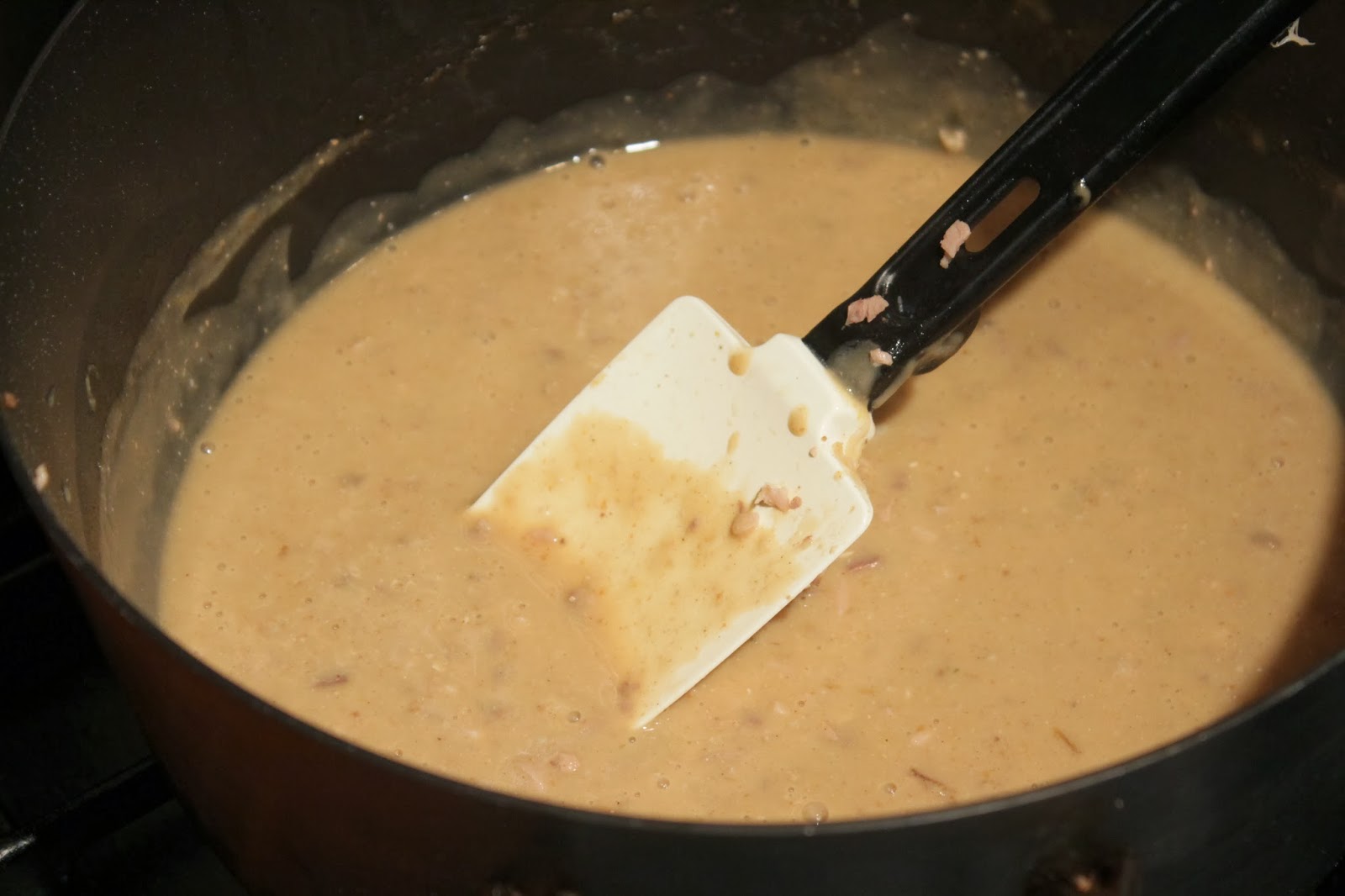
Place the strained sauce in a pan on the stove over medium heat. Dissolve some potato starch in a bit of water and add it to the sauce and simmer until slightly thickened.

Thickening the sauce on the stovetop

Arrange your chicken pieces and veg in a wide, shallow bowl and top with the sauce. And go easy on that sauce. That golden color and delicious flavor comes from animal fat. Plus, the surprise best-tasting element of this dish - the onions. They come out sweet and fatty and melt in your mouth. And that's how you get coq au vin on a Thursday night.


Weekday Coq au Vin

Tuesday, July 23, 2013

Shrimp with Beurre Blanc

While I was at work today, my counterpart whipped up a beurre blanc sauce. This is another one of those things that you can do yourself at home if you know a couple of things.

Beurre Blanc is not a classic French sauce - it's actually fairly modern, having allegedly been discovered by accident about 100 years ago by Chef Clémence Lefeuvre. She was supposedly working on a Bearnaise and she forgot to add the egg yolks. She still ended up with a decent emulsification, so she plated up. 

For us non-French chefs, life does not always go so well. Anyone who has ever played around with a recipe and thought that mixing vinegar, wine, and shallots together was a good idea might claim that no one would do this on purpose, and that all the butter in the world might not save the sauce. Turns out there is a bit of an art to it. 

Your basic beurre blanc starts with vinegar and wine, and the wine makes a difference here. You'll want a very sweet white like Champagne to cut the bitter edge off the rest of the ingrdients. You'll want two parts wine to one part vinegar, and you'll want to reduce it.

Once you have your reduction, you'll also want to add any combination of shallots, leek, and garlic. Traditionalists will stick to shallot, but leek and garlic add a little depth.

You'll also want about half a stick of butter, cut into about five or six pieces. Once the shallots, etc., have cooked, add the butter, reserving two pieces for later. When the butter has melted and is integrated into the sauce, remove it from the burner and add the two remaining pieces of butter to melt at their own pace.

Beurre Blanc - white butter


This will result in a sauce that is sweet, tangy, buttery, and surprisingly light. The Champagne will cut through the bitterness and will bring out the subtle sweetness of the shallot that is otherwise overpowered by its bitterness.

Fresh shrimp


This sauce is an excellent partner for seafood, and my counterpart served it over fresh shrimp that he sauteed with a little jalapeno, leek, and peas. Pasta tossed with a Spanish goat cheese and a smattering of lima beans rounded out things out nicely. It was completely unexpected for a Tuesday, and it was completely delicious.


Beurre Blanc over shrimp

Sunday, June 9, 2013

A Primer on Fiddlehead Ferms

Since I first learned they are edible, I have long been fascinated with fiddlehead ferns. We find them at the Wegman's quite often, but usually in a dreadful state, and my counterpart has been reluctant to deal with them. Then, while he was visiting the Pittsburgh office of his employer, he posted a photo of his dinner one night that included fiddlehead ferns. I stepped up my campaign, and last night I got them.

Ferns are an interesting plant. While the young shoots are edible, as the plant continues to grown, the fern becomes toxic to humans. They must be harvested when they are still in that coiled, fiddlehead shape. While dirt is not a problem with this vegetable, storage is. We have seen many ferns on display that are already on their way to rot and ruin. When selecting fiddleheads at the grocery store, look for a nice healthy green color, and avoid anything that looks black. If you see a lot of black in the selection, best to put off your fern experience, or ask the produce manager to check the back for some fresher specimens.

Fiddleheads are easy to clean as long as they are fresh and healthy


In application, fiddleheads can be used the way you would use asparagus. They are similar in taste, but their round, coiled shape gives then a distinct mouth feel that I find preferable to asparagus. They are also more bitter, but this can be cut with butter and cream in the cooking process.

Paired with mushrooms in a succulent little medley
For our fiddleheads, my counterpart made a medley of the ferns with mushrooms, shallot, leek, and garlic with some fresh basil and oregano, and just a little sage. Using these bitter elements to season an already bitter vegetable accented its natural flavor when other elements were added to mellow it out.


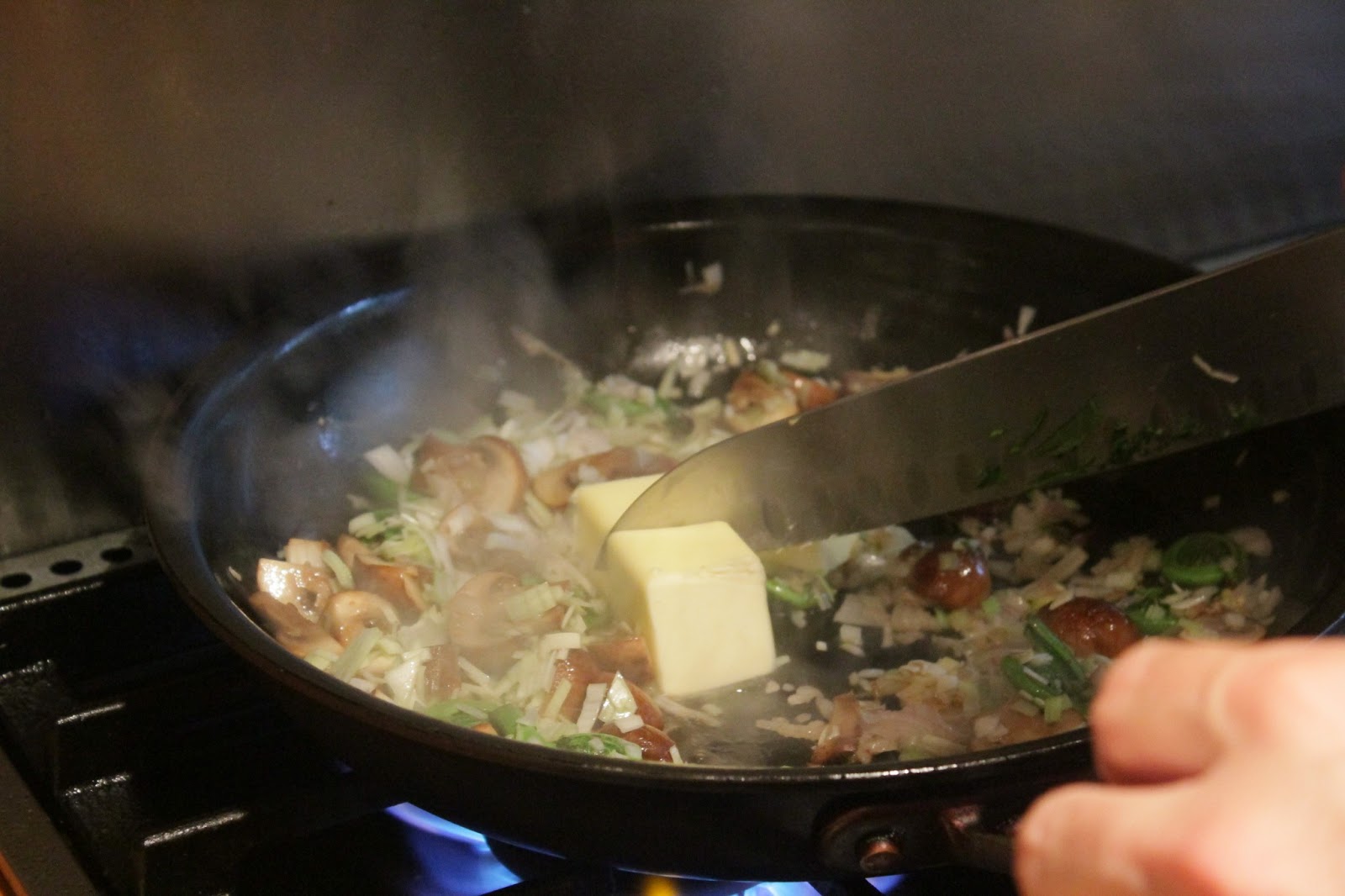
Mmmmmmmm butter

He cooked them on the stovetop, using a little wine, a little cream, and a lot of butter. The end result was tender mushrooms, crisp fiddleheads, and lots of buttery goodness. Served with bread alongside to absorb some of that fat, this dish was so flavorful, I had three servings.


I single-handedly finished off most of this

Sunday, May 26, 2013

Petit Louis Bistro: Total French Immersion

There are so many restaurants these days who are making the minimal effort at creating a space for people to dine and providing them with a decent meal. As we increasingly abdicate our responsibility to provide food for our families to these charlatans, the bar for what is worth paying for gets lower and lower. So often we are served up foot that resembles frozen dinners, both in flavor and craftsmanship, as if we should be willing to pay to have someone else do the cleaning up and count ourselves satisfied.

Then there are restaurateurs who are committed to their craft, who invest their efforts and creativity into building a dining experience that surpasses the ordinary, that is enjoyable and memorable and leave you feeling like the meal was a truly special occasion. For our 14th wedding anniversary, we wanted just that, and Chef Cindy Wolf provided it with Petit Louis Bistro.

Petit Louis is a French bistro located in Baltimore's finest residential neighborhood. But, this is not some American dining experience dressed up like a caricature of the French. It is actually a fair replication of European dining. The host greeted us in enthusiastic (but not overpowering) French. The seating is close with a couple of thoroughfares for the staff to traverse the dining room. And, as a welcome departure from American establishments, there was no music playing, allowing the diners and the staff to create the atmosphere. I also enjoyed that on this mild May evening, we were not subjected to what is almost always too-cold air conditioning. Petit Louis has windows along the dining room that were open, allowing the fresh spring air and home sounds of the surrounding neighborhood to waft in.

Achieving the French atmosphere


The menu is fairly straight-up French and runs the gamut from familiar items like pea soup, smoked salmon, and grilled asparagus to things that only the French would cook, like escargot, confit, and sweetbread.

My counterpart started with the smoked salmon gravlax for his starter, followed by duck confit. I chose the straight French immersion experience and had the escargot for  my starter and the Ris de Veau sweetbread for my main.

The gravlax were lightly smoky, very buttery, and shaved paper thin. Served with a creamy cheese and the most amazing capers that reminded me of Italy. So often capers are mishandled in American kitchens that the acidulation they acquire from the preserving process overpowers whatever you pair them with. These were clean, earthy little berries that were the perfect accent for the dish.

Escargot in butter in the fore, gravlax in the back


My escargot were served shelled and nestled in the traditional sectioned plate with each little mollusk nested in its own butter-filled compartment. The butter was rich and herby with just a hint of garlic, while the escargot themselves were tender and slightly pungent tasting of seawater when bitten.

The duck confit was a generous leg with a crispy skin that snapped when my counterpart cut into it. The meat inside was dark and moist and tasted very strongly of duck. While confit is by design a fatty dish, this confit was not greasy or oily, but was very, very rich. Served on a bed of sliced potatoes, this was heavy, but flavorful, achieving a balance that is part of the artistry of French cuisine.

My sweetbread was a work of culinary perfection. Nestled in among sauteed mushrooms in a Madeira reduction, the organ meat was seared on the outside and tender on the inside without a trace of the bitterness that is so characteristic of this part of the animal. The mushrooms were cooked to perfection, and the rich reduction was a nice counterpoint to the livery flavor of the meat.

Sweetbread in the fore, duck confit in the back


Now, here's something I love about French dining. In addition to thinking one can cook things like snails and organ meat, or that it is somehow OK to leave your poultry in a kettle in the cellar for a couple of months, the French also believe that after a nice meal, one should have a little cheese. Petit Louis has a nightly cheese cart with varieties that range from a mild Spanish-style manchego to a potent little variety that had to be stored in its own separate box. While my counterpart ordered the former, I had to go for the latter, plus an aged goat cheese to round out the selection.

The very French apres dinner cheese cart


The manchego was tender and mild and a good choice after the confit.  The aged goat cheese had a thick rind that was only slightly bitter with a musky, chalky interior. And that little number in its own separate box? Overwhelming. The cheese itself was the texture of taffy with a flavor almost like aged brie that goes very sharp in the back of the mouth. It was surrounded by a crumbly orange rind that was so foreign and intense that I needed a second bite to determine that it was indeed too moldy even for my open-minded palate.

Assorted cheeses with toasted baguette


We shared a dessert that my counterpart has made at home with much success - pots du creme au chocolat. Served with a dollop of heavy, almost buttery cream, it was gratifying to experience how this dessert is prepared by an actual French chef. Dense and dark and rich, we were glad for the espresso we ordered along with it to help cleanse the palate (although when we were still awake after midnight, we were reminded that age alters what one is able to do in life, after-dinner coffee being among the simple things we really should no longer do).

Authentic pots du creme and the espresso that will lead to trouble later


The food was excellent, and this is easily the best meal I have had outside my own home. The service was polite and efficient with the right level of attention - no hovering waitstaff bragging about the kitchen, but rather competent,knowledgeable professionals confident in their work.

We will definitely be returning to Petit Louis.

Located at 4800 Roland Avenue just east of Edy's, Petit Louis Bistro is open for lunch and dinner Monday-Saturday, and brunch and dinner on Sunday. During the week, they provide a prix fixe menu, while on the weekend it is a la carte.

A happy food blogger