Showing posts with label dishes. Show all posts

Sunday, November 17, 2013

All About the Gravy

Thanksgiving is about 10 days away, so it's time to get serious about cooking again. The nice thing about Thanksgiving is that it is really all about the meal - that opulent turkey dinner that most of us only muster this one day of the year. And because that turkey is really the cornerstone of the day, you want to bring your A game.

To help prepare for this major cooking event, today's posting is all about the gravy.

Perfect giblet gravy


But first, an important note about the turkey, because the wrong bird will stop you dead in your tracks. I bring this up because over the last few years I've seen an increase in turkeys that come with a sad little packet of pre-made gravy instead of the traditional packet of neck and giblets. Read the packaging carefully and make sure you pick up a bird with the giblets. Pull them out of the carcass, and trim the ends off the wings, and set them all aside for a moment.

Here's also a nice trick for roasting that will keep the bird moist and flavorful. Turkeys are pretty lean and are prone to drying out in the cooking process. While a free range bird is less likely to dry out than conventional birds, many of us keep it from drying out by adding fat like butter. Put the butter away and try this: Mix dried rubbed sage and salt into a couple of tablespoons of duck fat and rub that on the exterior of your turkey. Duck fat is easy enough to come by. Sometime between now and Thanksgiving, pick up a duck and treat yourself to a duck dinner. Drain off the fat and save it until Thanksgiving.

Neck, giblets, wing tips, and butter

Once the turkey is in the oven, go back to those giblets. Now, most of us just cover them with water and leave them on the back burner to stock all afternoon. The key to a really flavorful giblet gravy is to brown them first - neck and all - in about a tablespoon of butter with some more sage and maybe a bit of oregano.


Mirepoix

A bit if veg will also boost up the flavor. You'll want to add some carrot, leek, onion, and celery hearts as if you were preparing a mirepoix. Let the veg cook until softened. Then add a couple of cups of water to the pot and throw in about half a bullion cube. Now you can set it aside to simmer while the turkey roasts.


Giblet stock


When the turkey is cooked through, you'll want to let it rest for a moment. While it is resting, go ahead and cut off some of those nice fatty bits near the butt. And, if you really want all those juices, pull the stuffing and turn the bird on its end to let everything drip down into the roasting pan.


Letting gravity do its thing


With giblets, stock, pan drippings, and some nice fatty meat, you are now ready to make your gravy. You will also need flour, butter, olive oil, heavy cream, and some variety of flavoring like Worcestershire sauce. We use a bit of sriracha sauce and some Pik-a-Peppa.

A little extra flavor


Start with a simple roux. In a heavy pan, melt down 3 tablespoons butter and 1/2 tablespoon olive oil. Add to that about 4 tablespoons flour and mix with a spatula until the flour has blended with the fats and has cooked off. This is important because cooked flour makes sauce but raw flour only makes paste. Mind the heat so that you don't end up at the other extreme with scorched flour as this is not appropriate for this application.

Cooked flour makes a sauce


Add your flavoring to the roux along with some heavy cream.


Then, remove your turkey from the roasting pan and place it on a platter because it's time to add the drippings.

Pan drippings


Use a spatula to scrape everything off the sides and bottom of the pan and carefully pour it into your gravy. Then, take those giblets off the back burner and strain the stock into the roasting pan to deglace the remaining sucs and add this to the gravy, keeping the heat fairly low.

Making use of the giblet stock


Now, before you add the giblets, you'll want to get out the immersion blender to smooth out the roux. If you have a uniform texture to your gravy before you add the meat, your gravy will be much more like a sauce. Which is actually what it is.

Emulsification


You'll now want to mince the giblets and that fatty turkey butt meat and add them to the pot. And, finally, you'll take on the neck. This will need to be done by hand to ensure you get the maximum amount of meat without also getting any of the bone. And it's worth it. This is some tender flavorful meat. Carefully pick as much as you can from the neck and mince it up before adding it to the gravy.


Giblets


Neck meat


Just needs a quick stir


Give everything a good stir. If it is not as thick as you'd like, get out the potato starch.You can find this at Asian markets, as well as at some kosher grocers. Mix a little with some water before adding to your gravy; then give it a couple of minutes to thicken up.

And, that is the perfect Thanksgiving gravy.

Sunday, June 9, 2013

A Primer on Fiddlehead Ferms

Since I first learned they are edible, I have long been fascinated with fiddlehead ferns. We find them at the Wegman's quite often, but usually in a dreadful state, and my counterpart has been reluctant to deal with them. Then, while he was visiting the Pittsburgh office of his employer, he posted a photo of his dinner one night that included fiddlehead ferns. I stepped up my campaign, and last night I got them.

Ferns are an interesting plant. While the young shoots are edible, as the plant continues to grown, the fern becomes toxic to humans. They must be harvested when they are still in that coiled, fiddlehead shape. While dirt is not a problem with this vegetable, storage is. We have seen many ferns on display that are already on their way to rot and ruin. When selecting fiddleheads at the grocery store, look for a nice healthy green color, and avoid anything that looks black. If you see a lot of black in the selection, best to put off your fern experience, or ask the produce manager to check the back for some fresher specimens.

Fiddleheads are easy to clean as long as they are fresh and healthy


In application, fiddleheads can be used the way you would use asparagus. They are similar in taste, but their round, coiled shape gives then a distinct mouth feel that I find preferable to asparagus. They are also more bitter, but this can be cut with butter and cream in the cooking process.

Paired with mushrooms in a succulent little medley
For our fiddleheads, my counterpart made a medley of the ferns with mushrooms, shallot, leek, and garlic with some fresh basil and oregano, and just a little sage. Using these bitter elements to season an already bitter vegetable accented its natural flavor when other elements were added to mellow it out.


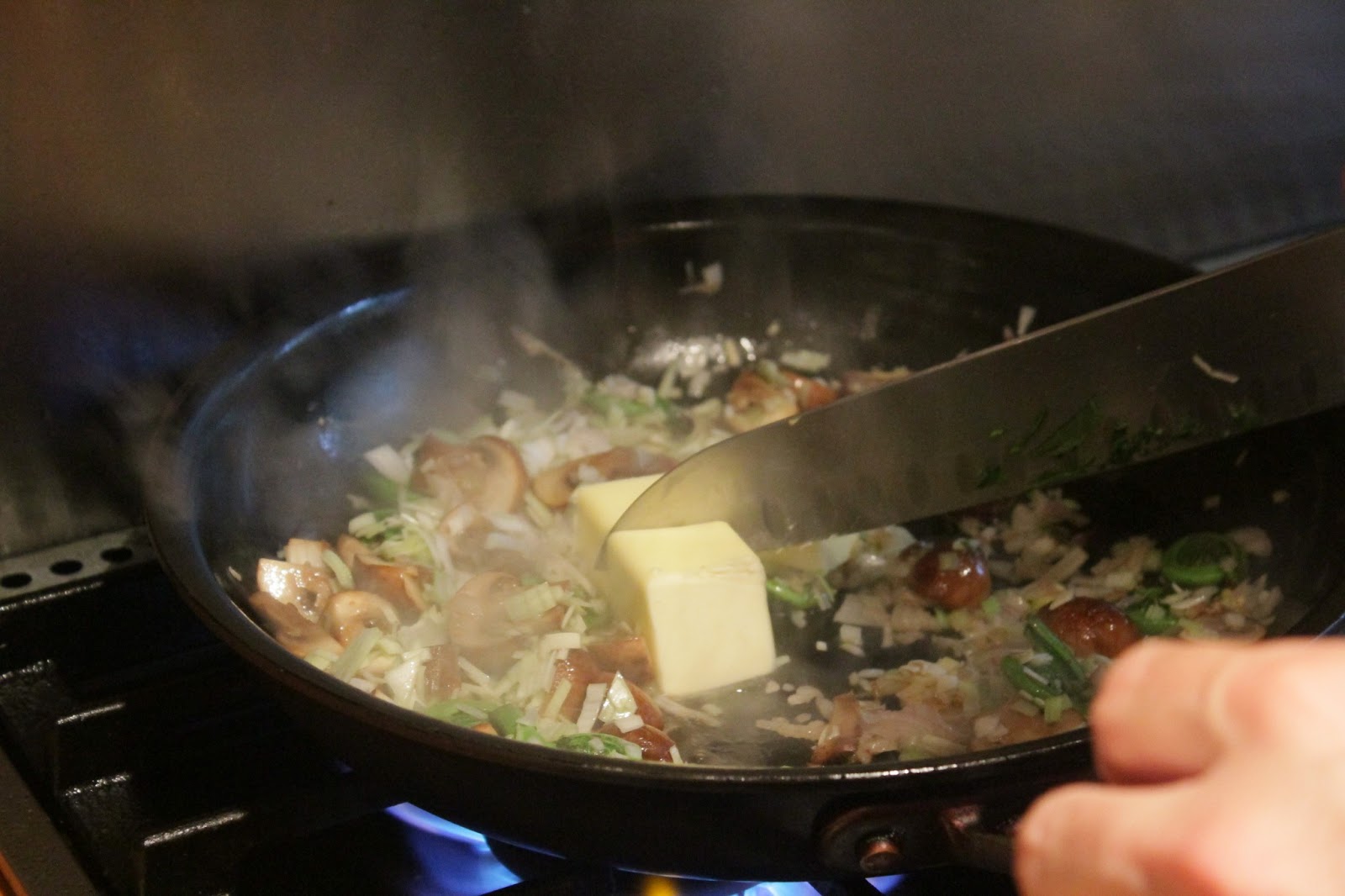
Mmmmmmmm butter

He cooked them on the stovetop, using a little wine, a little cream, and a lot of butter. The end result was tender mushrooms, crisp fiddleheads, and lots of buttery goodness. Served with bread alongside to absorb some of that fat, this dish was so flavorful, I had three servings.


I single-handedly finished off most of this

Sunday, March 17, 2013

Shaping Up the Dining Room

We've taken the first half or March off from blogging to do a bit of work on the dining room. Ours was covered in wood paneling - actual natural wood - stained to a dark and dismal coffee brown that has always made our dining room feel like a cave. So this year we decided to do something about it.


Wood paneling like ours lends itself well to the cottage or beach house style of decor. I have always been against this, feeling that the whitewashed wood and deliberately distressed finish associated with it to be pretentious and off-putting a la Martha Stewart. So we didn't do it. We painted several serious layers of white semi-gloss over that stuff and it changed the entire room. We also added a deep forest green around the windows and the toe molding and have created a completely different environment.


White walls and green trim is very beach house, even without the pickling


We also purchased a much-needed china cabinet. We have an abundance of the stuff, having acquired ancestral sets from both sides of the family. Mine is a rosebud Spode pattern that was my great-grandmother's. It is simple, beautiful, and reminds me of where I come from.


Sorting the china with a little help from Gracie


My great-grandmother's Spode


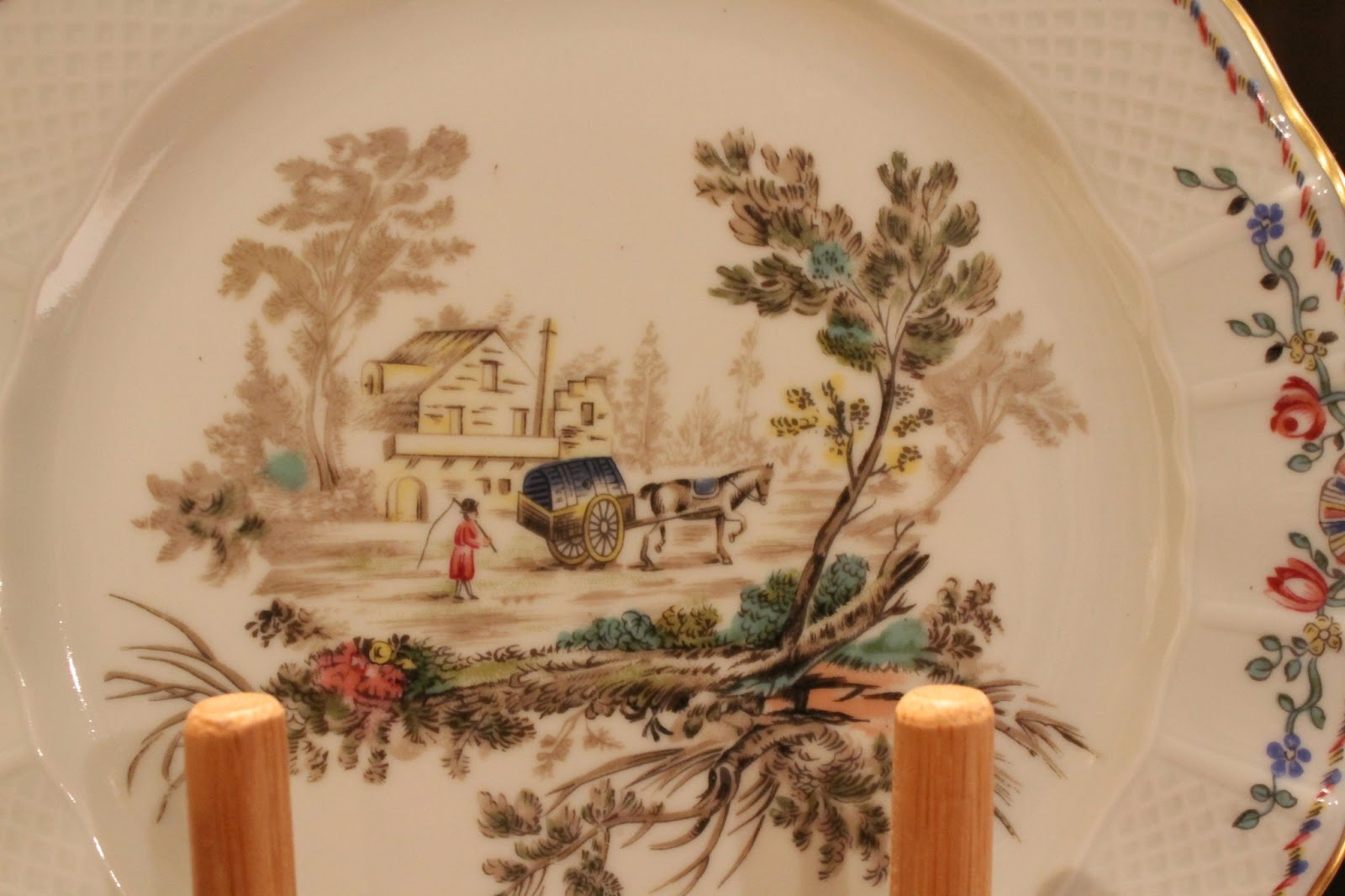
My counterpart's is an elaborate set of Limoge china that one of his mother's forebears brought over from France. It is service for eight  like my great grandmother's Spode, but the Limoge is indeed a full service, consisting of dinner, salad, bread, and dessert plates, plus tea cups and saucers. Each piece has a different scene of provincial French life painted on it, from hunting to gardening to going to market. This set is truly a work of beauty and will take prominent position in the cabinet.


Salad plate

Bread plate

Dessert plate

And as I sorted through my in-laws' heirloom china, placing it carefully in my first china cabinet, in the dining room that I had designed with my spouse, I felt as if I had found my place in the domestic portion of my life. So often I cling to the old #badwife as a part of my identity when it has always masked my insecurities with creating a home, my great fear of failure as a true domestic partner. Today it is all but disappeared.