Showing posts with label barbecue. Show all posts

Thursday, July 4, 2013

Freedom Pheasant

On my birthday, I usually get some variety of game, so it only makes sense that on our nation's birthday, this also holds true. And, since it is July, it's going to be grilled.


To mark Independence Day, my counterpart grilled up another pheasant. There are some preparations you need to make for grilling a game bird that are not necessary with a domesticated bird like your typical chicken. First, you'll need to understand that pheasants are only partially domesticated. Even the ones at the grocery store most likely were not raised on a farm but were allowed to fly freely in an open space. They don't go through a factory for cleaning and packaging like our mass-produced chickens and turkeys. They are most likely plucked and packaged by hand. This, combined with their more muscular physique, means that the first step to preparing your pheasant  is to ensure that there are no little down feathers or quills on the carcass. You'll need to remove any plucking residue by hand. 


And here's one of the rare occasions when you can use your MAP torch in the kitchen as this is a good way to finish the job. Remember you are not trying to sear the bird. You're just trying to burn off any little hairs that might remain.


To ensure even cooking on the grill, you'll want to split it down the middle, or even quarter it. We decided to quarter our bird.

Once it's split, you can season it with a little spice rub. For today's freedom pheasant, my counterpart combined mostly bitter flavors with a little heat, which tend to go well with the irony flavor of this game bird. This is a good spice mix for pheasant and other birds:

Ground oregano
Rubbed sage
Ground coriander
Chinese five spice
All spice
Red Tandoori spice
Salt

One of the problems with doing a spice rub is the presence of moisture from the cleaned bird. My counterpart resolves this by using a couple of large, shallow bowls. He placing his quarters in the first bowl for the rub. As he rubs each piece, he places it into the second bowl. Most of the moisture stays in int he first bowl, and the spices end up more evenly distributed.


For grilling meat, we are partial to the charcoal grill. It generates a nice smoke that is easily controlled for both heat and flavor. We didn't do anything fancy with any of the various types of natural wood we have been known to add to the grill. We simply started up the charcoal in our chimney starter, poured it into the grill, and let the flames die down until we had a nice smoldering heat.


Here's a nice thing you can do when grilling: place several lengthy sprigs of fresh rosemary on the grill and put your bird skin side up on the rosemary. Cover it and let it cook slowly, checking on it every so often to flip it. Ours cooked for about 90 minutes over low heat, which was long enough to cook it through without drying it out.


Once it's off the grill, you can glaze it with a sauce before serving. Glazing the bird after it is off the grill rather than while it's cooking prevents the sauce from scorching, especially if you're using a sweet sauce. And, today we definitely went sweet.


While the grilled pheasant was resting, my counterpart make a quick herbed caramel sauce using some of the same flavors from the spice rub. He sauteed fresh basil, sage, and thyme in a good amount of butter. He then added allspice and red Tandoori spice. Once the butter was completely melted, he added a splash of white wine, a couple of drops of habanero sauce, and a generous pour of King syrup. He let it boil for a few minutes before removing it from the stove and pouring it over our pheasant.


Paired with herbed potatoes, this was a spicy sweet sticky greasy mess of a perfect summer grill dinner. I live the robust and gamy flavor of pheasant. The stronger taste and firmer texture make it a superior alternative to chicken. While the price differential means it will never replace its domesticated cousin. But for something a little special from the grill, it's a very good choice.


Sunday, June 16, 2013

Jerked Pheasant

What I like best about my current life is all the people from other countries I've met. My counterpart and I have met people from all over the world. The cultural exchange is really an amazing experience sometimes. We recently had lunch with a former colleague from the Islands who gave us a wonderful explanation of Jerk. It turns out it's easier than you think, but it's all about technique.

Jerk is typically a dry rub that is applied to meat before cooking. While many of us may be familiar with Jerk chicken, one if its first uses was to temper the muskiness of small game animals native to the Pacific Islands. It is robust and will overpower more delicate meats. For our first Jerk experience, we chose the flavorful and slightly gamy pheasant.

Despite its exotic flavor, it is easier to make than you might think. Most of the spices you need are things you probably have on hand. The primary flavors are allspice and hot peppers. My counterpart started with this as the base, along witth cinnamon and salt. He also used smaller quantities of cumin, oregano, clove, and sugar. And, because he was planning on a slow smoke over the course of an afternoon, he mixed up a sweet and tangy marinade of white vinegar and corn syrup.

He bisected the pheasant along the spine and breast bone and rubbed the skin side. He then placed it skin side up on the grill over glowing charcoal and green wood to cook at a low temperature for about six hours, brushing on the marinade every so often.

The bird cooked through. The meat was tender and the skin even crisped. It hit all my favorite flavor points - salty and spicy from the rub, tangy and sweet from the marinade, fatty from the crisped skin, and a little bitter from the smoke. I ate all the skin and licked the fat off my fingers. The allspice and smoke worked well with the gaminess of the pheasant. Even with all those strong flavors, the bird retained its own unique character and was the right choice for this application.

We paired our bird with a couple of boiled potatoes that were also placed on the grill for a bit. Sauteed in olive oil with some leek and fresh herb, they came out slightly sweet in that nice vegetably way that was a good counterpoint to the Jerk. Together they made the perfect summer meal.

Jerked pheasant with herbed potato and leek


Thursday, June 6, 2013

DIY Ham

With Gareth telecommuting to Pittsburgh and the warm weather upon us, grilling season is in full swing. The remote work schedule allows him to perform some amazing feats of slow cooking over the course of the afternoon. Today, while I was toiling away int he office, he smoked up the grill and turned an average pork loin into a very tasty ham.

In last summer's post on how to make perfect pork ribs, I provided instruction on how to prepare your charcoal grill to generate a a smoky fire that is well suited to slow cooking pork products. You'll follow a similar technique here. To prepare your grill for converting pork loin into ham, you will:

  1. Line the inside of the grill with foil. This is a no brainer as it makes clean up a snap.
  2. Use a chimney to start a couple of charcoal briquettes. This prevents the flavor of the lighter fluid from tainting your food.
  3. Place the lit briquettes on one end of the grill and let them burn down. You'll want smoke for this process, but not fire.
  4. Place fresh twigs on the other end of the grill. These should be small, plentiful, and still green. These will also generate smoke with the added bonus of releasing moisture into your smoking environment without needing a separate container of water in there.
Gareth prepped our pork loin with a dry rub rather than a marinade or barbecue sauce. His dry rub consisted of:
  • Sage
  • Salt
  • Oregano
  • Cumin
  • Paprika
  • Pepper
  • Sugar
with a heavy hand on the sage and salt.

Once the pork was rubbed and the grill was smoking, he let that pork loin smoke for a good three or so hours. During this smoking process, you'll want to check on the grill from time to time to feed it more green twigs and to ensure that there is no flame.

The result is remarkably close to ham, and a very good ham at that. Our pork loin ham came out moist and tender with a rich exterior rind. It was neither too sweet, too salty, nor too smoky, but struck the perfect balance of all those ham-like qualities so many of us love. It paired well with the vegetable and cheese-laden pasta salad he made on the side.

Monday, August 27, 2012

The Honey Pig

When my mom comes to visit, we try to show her a good time. We let her relax. We feed her well. And we take her someplace local for an experience she can't get at home. This year, we took her to The Honey Pig in Ellicott City.

The Honey Pig is a 24-hour Korean barbecue restaurant located on Route 40. It has a sparse, warehouse look inside with corrugated steel siding and posters for other Korean businesses. It is such a cultural experience that walking through their front door feels a bit like leaving the U.S. As near as I can tell, they are always busy. And why wouldn't they be?

They do the traditional table-top grill and offer a variety of spiced beef, pork, and organ meat that is cooked at the table and served with the usual accompaniments of kimchee, sliced fish cake, picked daikon, spicy green beans, and sliced raw peppers and garlic. They tend to direct foreigners like us toward more pedestrian items, but this is most likely from hard-learned experience. The Korean palate is used to much more flavor than the typical Marylander can abide.

With my mother along for her first Korean barbecue experience, we let the waitress talk us out of the spicy pork bellies, but ended up with a good mix of bulgogi - seasoned beef - unseasoned pork belly, and beef tongue, a personal favorite of mine so long as it is not prepared by white folk.

The tongue was sliced thin and was very tender. It needed little seasoning and was quite good on its own. The pork was also sliced thin and took the special Korean hot sauce very well. This I ate with the raw garlic and peppers, wrapped in a little lettuce for the flavor explosion that makes Korean barbecue so enjoyable. The bulgogi was cut thicker and was marinated with sliced onion. It was a flavorful spicy rather than the heat my counterpart was looking for. Even so, we were all extremely satisfied with the experience.

The service is un-American in that once they have cooked the meat for you, they let you enjoy your meal, even allowing you to digest before presenting you with the bill. This is saying something for an establishment that perpetually has a line out the door. The Honey Pig is about the Korean dining experience. Patronized by ex-pats, immigrants, and guest workers, and filled with bouncy Korean pop music, they deliver just that.


Waiting for our table

A quick Facebook Mobile lesson


Pork belly on sale tonight


Preparing for our gastronomical adventure

The usual accompaniments

Fire up the grill


Beef tongue

Pork belly


Bulgogi


My counterpart enjoying his barbecue


Spicy tofu soup


Everyone is a member of The Clean Plate Club tonight


After dinner

A parting glimpse

Tuesday, July 3, 2012

Perfect Pork Ribs

The best part of summer holidays - aside form the sunshine and hot weather - is the prominent role of the grill. In the days beforehand, you can find some really excellent deals on meat. For Memorial Day, we were back in Wisconsin and returned with some brats. For Father's Day, we scored some serious duck breast. As Independence Day approached, we picked up an amazing load of ribs.

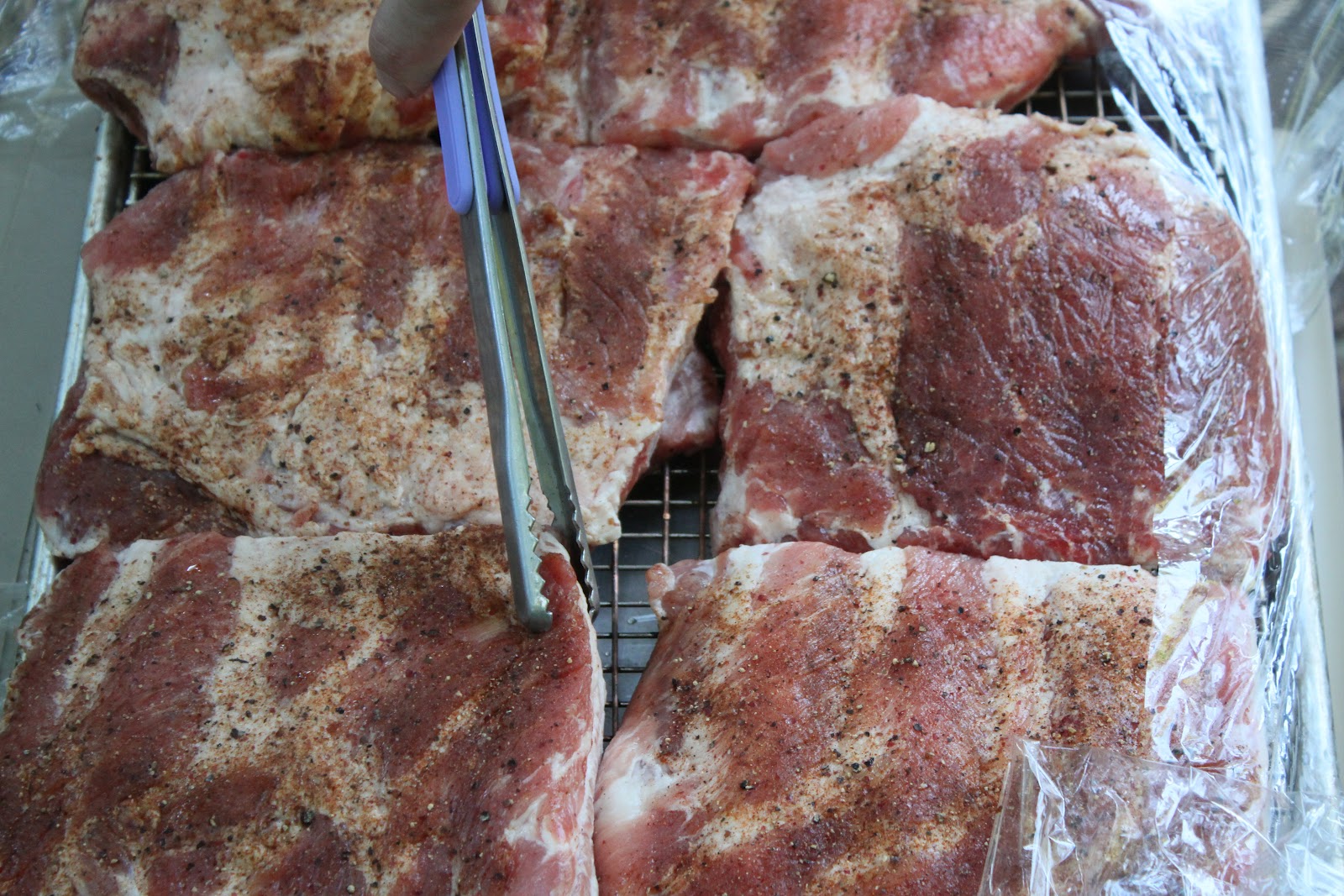
A small sampling of  our recent rib purchase, pre-seasoned and ready to grill


Just in time for your Independence Day cook out, here is the best pork barbecue sauce ever, followed by some basic grill instructions.

For the Sauce, you will need:

Salt
Sugar
White Wine Vinegar
Apple Juice
1 Lemon, Juiced
2 Jalapenos, Coarsely Chopped
Golden Raisins

All you need for perfect sauce


You will also need a blender. My counterpart is partial to the immersion blender.

In your blender cup, add several handfuls of raisins and the jalapenos and blend until thick and coarse. 


Raisins and jalapeno make a sweet-spicy pork glaze


Proceed to add in small quantities the remaining ingredients, blending and tasting until you have a smooth sauce that is spicy and tangy and sweet.


Blend well


Prepare the Grill


My counterpart is also partial to the charcoal grill, and the small ones work out well for us.


First, line the grill and the lid with heavy duty aluminum foil. This will help conduct the heat and will make clean up much easier.


Line the grill with foil and crease it

Also line the lid


Using more foil, create a small shallow pan for water. This will create a water bath that will help control heat levels and prevent the meat form drying out. You can also purchase these in the store in packages of 3 for about $2.50, but it is also pretty easy to make your own.


Fold in the edges of your foil to create a rim

Fold up the edges again making a wider fold. These are your sides.

Pinch the corners together

Here is your water bin


Place it inside the grill on the lower grate and add water.


It really holds water


To protect the flavor of the meat, start the charcoal in a separate fire-safe container, like a charcoal chimney pictured below. 


To prevent the lighter fluid from tainting your meat, start the charcoal outside the grill


Let the lighter fluid burn off and the fire die down and then add the smoldering coals to the grill.

Hot coals but no flame


To get a nice smoke, ad some wood chips. If you have trees in your yard, select some green branches as they will create a highly desirable smoke that will add to the flavor of the meat without burning too hot and charring the exterior. Wood smoke contains some trace minerals, like chromium and iron, which are transferred to the meat while it smokes. Smoking the wood also releases the naturally-occurring sugars, called cellulose, which mingle with the rendering fat and help form the meat glaze.

Remove leaves


Add the top grate and cover until some smoke has built up inside the grill.


Mmmmmmm smoke


Grilling the Meat


Place your meat in the cool end of the grill, away from the direct heat of the charcoal and over the water bath. 


Have a spray bottle of apple juice on hand. This will keep the meat moist and will also help a nice grill glaze form on the meat. Place the cover on the grill and relax.


The best grill results come from slowly cooking the meat over low heat. Periodically, you will want to check on things to add more wood chips, moisten the meat with apple juice, and to make sure that there are no flames.

While cats are very good at detecting when meat is ready to eat,
we still recommend the meat thermometer


As the meat is smoking, you will also want to introduce the sauce. My counterpart gets good results from using a squeeze bottle he picked up at the green Bay Restaurant Supply store, but you can also use an old ketchup or mustard bottle that has been well cleaned.


Smoke the meat until it is heated through. The most reliable method of determining this is still the meat thermometer.


If you are grilling vegetables, use a separate grill. The grills we used can be found at Wal-Mart and run about $10.

Cut the ribs apart and serve with more sauce.